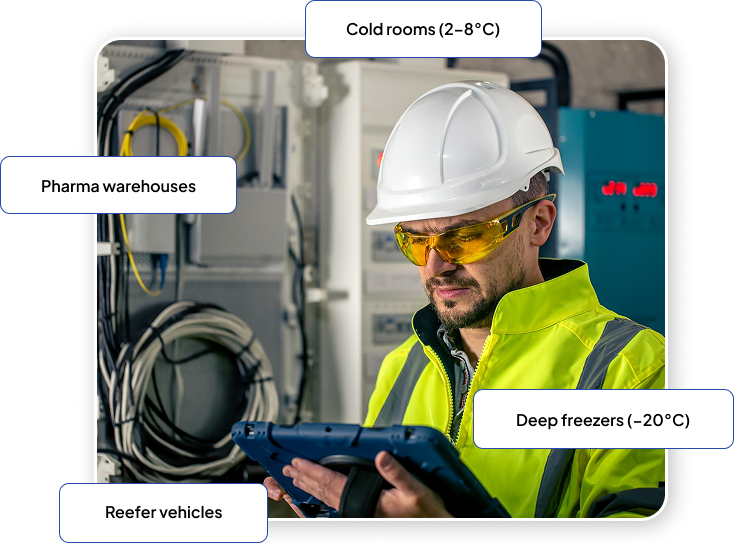
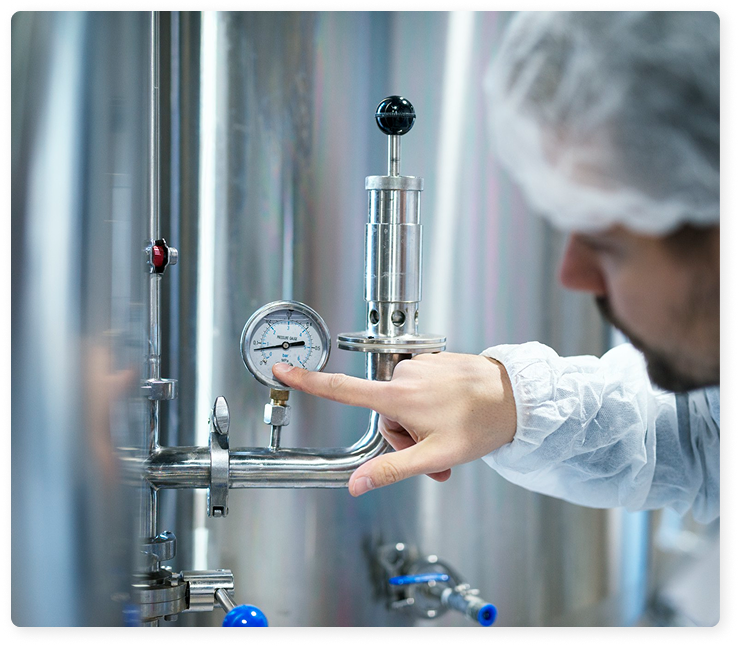
HYDRA delivers complete validation studies that provide clear insights into the performance of controlled environments. From warehouse temperature mapping to cold rooms, freezers, and reefer vehicles, every project is designed to identify temperature variations, support audit readiness, and generate the documented evidence required for regulatory compliance across Saudi Arabia, the UAE, and Oman.
Data logger placement plan based on facility layout
Audit-ready report aligned with WHO GDP
Pre and Post Calibrated installation and monitoring
MKT calculation per SFDA requirements
Hot spot & cold spot identification

Frequently Asked Questions
Have any thoughts? Look here
Temperature Mapping Services in Saudi Arabia involve measuring and recording temperature distribution within controlled environments such as warehouses, cold rooms, freezers, and reefer vehicles. These studies identify hot and cold spots, verify storage conditions, and support compliance with SFDA, WHO GDP, and other regulatory standards.
Warehouse temperature mapping helps verify that storage conditions remain consistent throughout the facility. It identifies temperature variations that could affect product quality, supports regulatory inspections, and provides documented evidence required for pharmaceutical and healthcare compliance.
Temperature mapping is recommended for pharmaceutical warehouses, cold rooms, refrigerators, freezers, reefer vehicles, laboratories, hospitals, and other temperature-controlled environments where product quality depends on stable storage conditions.
A typical temperature mapping study includes data logger placement, calibrated monitoring, hot and cold spot identification, MKT calculations where required, and a comprehensive audit-ready report that supports regulatory compliance and inspection readiness.
HYDRA performs temperature mapping studies in accordance with SFDA requirements, WHO Good Distribution Practice (GDP), MHA, DOH, and internationally recognized best practices, helping organizations maintain compliance and protect temperature-sensitive products.